Showing posts with label Insurance Policy. Show all posts

Thursday, 8 September 2016

How to Pay Premium Plan for Life Insurance Policy

Premium for life insurance is paid yearly. But there may be a risk of policy lapse if the premium is not paid on or before expiry. Life insurance plan has many options to pay the premium. Customers can select as per their convenience.
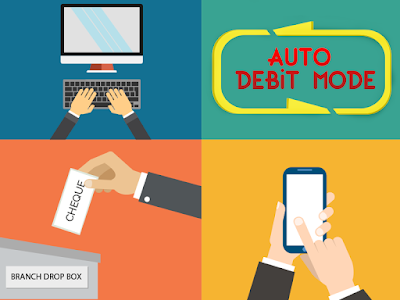
How to Pay Premium Plan for Life Insurance Policy

•   Online Mode

To pay online, customers can log on the website of insurance company and select online premium payment option. Information such as PAN and policy number is required to fill the form. Payment options available are Net Banking, Debit Card, Online Banking and Credit Card.

One should make sure that he/she has saved the online premium paid print/receipt copy provided by the insurer after completion of the process.

Payment can also be processed by filling the bank specifics of the insurer on the bank of policyholder.

•   Auto Debit Mode

One of the most convenient option, wherein the customers can place an auto debit instruction by using their credit card with the insurance company. They can also do this by registering an ECS or NACH.

Insurance companies already have collaboration with banks or other electronic bill processing machines. After registering through this process, the premium amount will automatically deducted on or before the scheduled date. In this case, relevant form is required to fill with cancelled cheque that will be submitted to the insurer.

•   Branch Drop Box Option

Insurers also have collaboration with the banks to offer the cheque drop facilities. This premium cheque can be submitted to the insurer or the insurance broker. Online NEFT and RTGS option are also available.

•   Mobile Phone Mode

Premium payment of life insurance policy can be processed through phone. This process is done by calling an assigned authorized person of the insurance company. Credit card information is needed to make payment done.

Know your Rights and Duties for Policy

Monday, 5 September 2016

Basic Concept of Auto Insurance – Understanding the Coverage

Note: All the private and public sector insurance companies are governed by IRDA (India Regulatory and Development Authority).

Auto Insurance coverage provides financial protection if the policyholder causes an accident that damages other person’s car, property, injuries etc.

Basic Concept of Auto Insurance – Understanding the Coverage

In order to find the best-suit coverage, one must know which type of insurance coverage is offered and what other add-ons can be beneficial. For this, customer must know the types of coverage and premium cost of each.

Low premium policy covers minimum coverage, so one should know the add-ons to get the coverage plan as per the requirement. Here is the brief list of coverage in which some coverage is must-have, come are optional and some are add-ons beneficial.

1)    Must-have Coverage

Auto liability coverage necessary for all vehicle owners includes

•    Bodily Harm Liability


The coverage costs against the body injuries or death of others caused by policyholder.

•    Property Damage Liability

The coverage costs for others’ property damage such as vehicle or building that is caused by policyholder.

2)    Needed Add-ons Coverage

Most of the coverage needed frequently:

•    Medical Expenses Coverage

The coverage gives reimbursement for medical expenses for policyholder’s injury or body harm.

•    Uninsured Motorist Coverage

The coverage provides the cost when an accident is occurred by an uninsured motorist or hit-and-rum case.

3)    Optional Coverage

Optional coverage assures the care of the damages to the policyholder’s vehicle.

•    Collision Coverage

This coverage provides the cost of damages incurred to the vehicle as a result of collision with another vehicle or other object such as pillar or tree. Collision coverage does not cover losses such as Wear and Tear, Mechanical Breakdown, Uninsured accessories like Gas Kit, Bi-fuel, and Tyres.

•    Comprehensive Coverage

This coverage provides protection against theft or damage caused by natural or manmade disasters such as fire, earthquake, detonation, flood, cyclone, storm etc.

•    Glass Coverage

Most of the insurers do not include glass coverage. But customers can get coverage such as Side Windows, Rear Windows and Glass Sunroofs.

Above mentioned type of the vehicle coverage is offered by the insurers. Customers can select one as per their requirement.

Get more IRDA Guideline

Saturday, 3 September 2016

Six Myths People Believe about the Auto Insurance Policy


Six Myths People Believe about the Auto Insurance Policy - Insurance Classified

Before buying best-suit insurance plan, one should understand the terms and information covered in the plan affecting the cost and coverage. Moreover, customers may have myths in their plan. So they should know the truth and fiction involved. A wisest consideration is to know these myths and the real facts:

Myth 1: The colour of the vehicle concludes the cost of auto insurance

The colour of the vehicle is not included in the factors determining the cost of the insurance. What does matter is the type of the car, model, engine size, the age of the vehicle, age of the policyholder, driving record and credit history.

Myth 2: Credit has no effect on Insurance rate

Customers’ credit-based insurance score matters. The reason to take this into consideration is to know how well a customer manages financial affairs. Insurance policy, renew of the plan, insurance coverage and record of claim comes in credit score. The people having good credit record end up paying small premium for insurance when insurance scores are factored into the pricing equation.

Myth 3: Insurance policy covers the policyholder if the car is lost, destroyed or damaged by falling tree fall, storm, flood, fire etc.

Customers should know that all the insurance policy is not covered the terms mentioned in this myth. These all will be in control, if the customer opts for comprehensive & collision coverage along with the standard liability coverage. Many insurers offer additional coverage, which can help you protect from various important factors. So, know all the plans before purchasing.

Myth 4: Customers need coverage of only the minimum auto liability insurance

According to the Insurance law in India, all vehicle owners should have minimum third party liability coverage. This is done to protect other persons, who suffer because of damage/loss done by the policyholder. But chances are that vehicle owner needs more insurance coverage than third party liability because accidents often cost more than the minimum limits. Getting minimum cover means to pay more out-of-pocket for losses incurred in an accident.

Myth 5: If person other than policyholder drive vehicle, their insurance also cover in case of accident 

Insurance offers coverage of the policyholder, not the person who is driving the vehicle. Make sure this from the insurance company while purchasing the insurance. Most of the insurers also offer coverage of policyholders’ driver.

Myth 6: Personal auto insurance gives coverage for both personal and business use of the vehicle

Personal auto insurance will not cover if you are using vehicle for business purpose. For this, one can opt for commercial auto insurance by keeping a good driving record.


Thursday, 25 August 2016

Insurance Policies Every Human-being Must Have

What is Insurance?

Insurance is a convention between the insurer (the insurance service provider) and insured (the insurance policyholder). In this, the insurer commences to pay the insured a fixed amount (called premium) for handling of certain happenings such as vehicle damage/loss, health issues, problems in travelling to other location etc. Through insurance, every policyholder gets compensation of the actual loss when it takes place due to the risk insured.
Insurance Policies Every Human-being Must Have

Here is a list of Insurance policies; every human-being should consider in his/her life:

1)  Long-Term Disability Insurance

Keeping an attitude that “nothing will happen to me or my family” is simply not a good idea. Instead, choosing Long-Term Disability Insurance to continue your smooth lifestyle is a smart decision.

This insurance takes care of a person from loss of income in order to continue same living lifestyle, if policyholder is unable to work due to illness, injury, or accident for a long period of time.

2)  Life Insurance

The insurance gives financial protection coverage for those who are dependent on the person. This must-have policy secures parents, spouse, children or other loved ones financially, if a person has met with any disaster term (for example Death).

Life Insurance is the policy that will replace the income and give complete support in case of unfortunate demise.


3)  Motor Insurance

Motor insurance is also required in most cases. This is what a person should not skip. If a person has met with an accident, and is injured or their property is damaged, person could be a subject to a lawsuit that could possibly cost everything you own.

4)  Health Insurance

Now-a-days, high cost of hospitality care is the reason enough to buy health insurance as essential.  A simple visit of the doctor at home results in a hefty bill. More serious health issues charging hospital stay will cost a major financial loss. Even operations require five-figure bucks.
Health Insurance takes care of such cases mentioned above.

5)  Travel Insurance

Traveling is the normal thing for everyone. For official purpose or some other reason, person has to move repeatedly. While travelling, unwanted tragedy such as checked-in baggage loss, medical emergencies, trip cancellation or some interruption may cause major issues. Travel insurance secures us from such problems.

Buy Policy carefully

In market, various types of insurance policy are available having different advantages, features and prices.  Add-ons are also available with each policy plan. One should buy carefully.

It is advisable to read the policy plan and contact insurance agent to be certain that you understand the coverage and the cost. Make sure that the policy you are purchasing fulfils your requirement and don’t sign on the papers until you are satisfied with your plan.